Touchscreen MacBook Pro: Price, Features, and Buying Advice
Touchscreen MacBook Pro: Price, Features, and Buying Advice
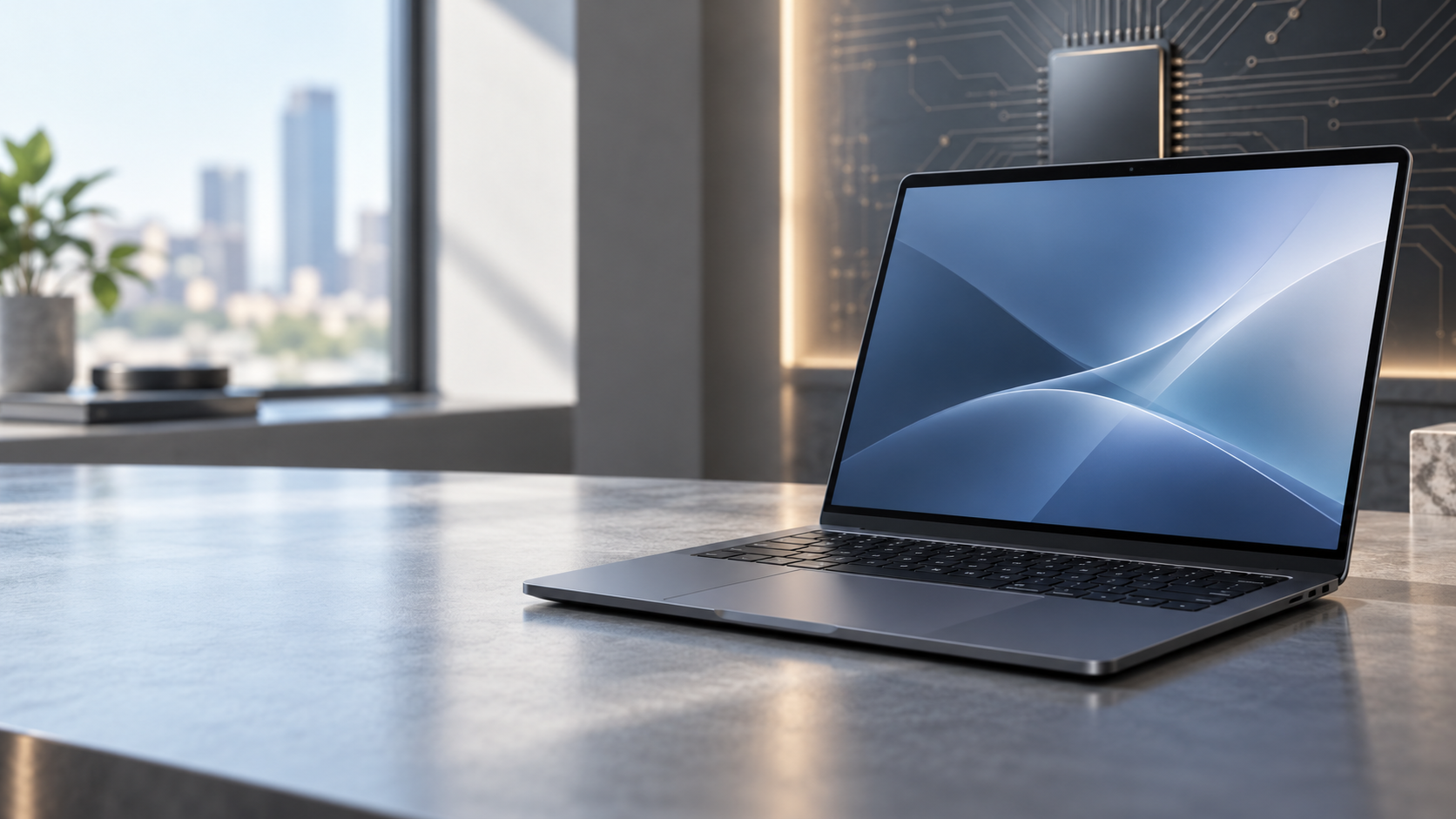
Apple may be preparing a touchscreen MacBook Pro with an OLED display and a price aimed at the premium end of the laptop market. Reports suggest the company believes some professional buyers will pay more for a MacBook that combines traditional macOS productivity with direct screen interaction.
The reported price is about $2,899, although that figure is not an official Apple price. The possible device has not been formally announced, and Apple has not confirmed its specifications, release date, availability, or final design. FourWeekMBA reports the potential $2,899 touchscreen OLED model
The move would represent a major change in Apple’s laptop strategy. Apple has traditionally separated MacBook laptops from iPad tablets: MacBooks focus on keyboards, trackpads, macOS, and desktop applications, while iPads emphasize touch interaction and portability.
A MacBook Pro touchscreen could blur that boundary. It could also raise questions about price, software design, battery life, weight, repairability, and the iPad’s future role.
What Apple May Be Planning
A major product shift
Apple may be expanding touchscreen functionality into its professional laptop range. Bloomberg’s report focuses on Apple’s expectation that MacBook Pro buyers could accept a premium for touch displays. Bloomberg’s report describes Apple’s touchscreen MacBook Pro strategy
This would involve more than a display upgrade. A touchscreen MacBook Pro could require changes to the display assembly, hinge, enclosure, operating system, and application interfaces. Apple would need to make touch input useful without weakening the keyboard-and-trackpad experience that defines the MacBook.
The device could also overlap with the iPad Pro. Their differences would likely depend on operating system, portability, keyboard design, application support, and external-display capabilities.
Apple has not confirmed that the product will launch. The touchscreen MacBook Pro should therefore be treated as a reported or potential device, not an announced product.
A possible OLED display
Reports describe a possible MacBook Pro that combines touchscreen input with OLED display technology. OLED panels can produce deeper blacks and higher contrast because individual pixels can turn off completely. This could benefit video editors, photographers, designers, and users who regularly view high-contrast content.
However, the reported display details remain incomplete. Apple has not confirmed the screen size, resolution, brightness, refresh rate, color performance, battery impact, durability, or burn-in protection. OLED technology does not automatically guarantee better battery life or more accurate colors.
The combination of an OLED panel and a touch-sensitive layer could also increase manufacturing complexity, making the display one of the product’s main reasons for a higher price.
The reported $2,899 price
FourWeekMBA reports a potential price of $2,899 for the touchscreen OLED MacBook Pro. That figure is not a confirmed starting price. It could represent a specific configuration, an estimated price, or a target for a high-end model. FourWeekMBA cites the potential $2,899 price
At that level, Apple would position the device above many premium laptops and potentially above some current MacBook Pro configurations. The final price would depend on memory, storage, processor, screen size, and configuration. Apple could offer touch as a premium tier rather than making it standard across the MacBook Pro range.
Why Apple Might Charge More
A touchscreen OLED MacBook Pro could require:
- A touch-sensitive display assembly.
- Touch controllers and additional electronics.
- A redesigned display enclosure.
- A hinge engineered for repeated touch interaction.
- New software integration and quality-control testing.
- Additional protection against fingerprints, scratches, and display damage.
These changes could increase production costs, although hardware expense would not be the only factor behind the retail price. Apple’s pricing would also reflect research and development, product positioning, component availability, storage and memory options, and expected demand.
Touch interaction may place different mechanical demands on a laptop display. The hinge would need to remain stable while users tap, swipe, and press the panel on a desk. A damaged display assembly could also cost more to replace if the OLED panel and touch hardware are integrated into one component.
Who Could Benefit?
A touchscreen MacBook Pro could appeal to:
- Designers and illustrators.
- Video editors and photographers.
- Developers who use interactive dashboards.
- Business users who review documents and presentations.
- Creative professionals who currently use both a MacBook and an iPad.
- Buyers who want a premium display for visual work.
Potential uses include adjusting sliders, zooming and rotating content, selecting design objects, marking up documents, reviewing video timelines, navigating photographs, and interacting with presentations.
Touch would not necessarily replace the trackpad, keyboard shortcuts, mouse, or graphics tablet. In professional software, precise pointing devices and keyboard commands would probably remain faster for many tasks. The touchscreen may work best as a secondary input method.
The value would depend heavily on software support. Touch input is more useful when applications provide larger controls, better gesture support, and touch-specific layouts. Hardware novelty alone may not convince buyers to spend hundreds of dollars more.
Potential Benefits
More direct creative interaction
A touchscreen could make quick adjustments and navigation more intuitive. Users might interact directly with images, timelines, documents, and presentations instead of reaching for the trackpad.
OLED image quality
OLED could provide higher contrast, deeper blacks, vivid images, and stronger performance in dark scenes. Buyers should still consider color accuracy, calibration, brightness, reflections, battery life, durability, and possible burn-in.
Less need for a separate tablet
One device could combine MacBook Pro performance, a large interactive display, a physical keyboard, a trackpad, macOS applications, and traditional laptop productivity. This could appeal to users who currently carry both a MacBook and an iPad.
The trade-off would be size and ergonomics. A MacBook Pro would likely be heavier and less comfortable to hold than an iPad, with less flexible tablet positioning and potentially limited touch support in some applications.
Key Questions and Drawbacks
Will macOS be designed for touch?
macOS has traditionally been designed for a pointer, keyboard, and trackpad. Menus, window controls, and application interfaces may be too small or densely arranged for comfortable finger use.
Apple would need to improve touch targets, gesture support, window and menu interaction, application optimization, and transitions between touch, pointer, and keyboard input. If macOS remains primarily a desktop interface, the touchscreen could feel secondary.
Could touch affect battery life or weight?
A more complex display assembly could affect weight, thickness, battery capacity, and repairability. OLED panels may have different power characteristics from LCD panels, while touch hardware adds components.
Reviews should measure battery life during ordinary work, video playback, browsing, creative applications, and touch-heavy tasks. They should also examine heat, fan noise, hinge stability, and total weight.
Is $2,899 too much?
The price may be easier to justify for buyers who need professional performance, work with visual content, value OLED image quality, use touch-enabled workflows daily, or could replace a laptop-and-tablet setup with one device.
It may be harder to justify for buyers who primarily write, code, browse, or manage email; already own an iPad; rarely use touch input; want the best gaming performance for the money; or prioritize upgradeability and low repair costs.
Could it blur the MacBook and iPad product lines?
A touchscreen MacBook would not automatically replace the iPad. Weight, software design, stylus support, portability, and tablet ergonomics would remain important differences. Buyers who need desktop applications and sustained performance may prefer the MacBook Pro, while those who prioritize portability and stylus use may prefer an iPad.
Should You Buy Now or Wait?
Macworld advised readers to delay a MacBook Pro purchase ahead of a possible October 27 announcement. The report was published on October 20, 2026. Macworld’s report recommends waiting before a possible announcement
Reasons to wait
Waiting makes sense if you do not need a laptop immediately, want the latest display technology, are considering a high-end MacBook Pro, want to compare official specifications and prices, or could benefit from discounts on older models after an announcement.
Reasons to buy the current model
The current MacBook Pro may be the better choice when a work deadline requires a reliable laptop, existing performance meets your needs, touch input is unimportant, a substantial discount is available, or you prefer proven hardware over a first-generation design.
Before buying, compare processor performance, memory, storage, display quality, ports, warranty coverage, repair terms, and expected workload.
Windows Alternatives
Windows laptops already offer touchscreen displays across more price categories, including convertible and 2-in-1 designs. Many support styluses, multiple form factors, gaming hardware, and a wider range of configurations.
Mashable has highlighted nine Windows PCs as alternatives to Apple’s MacBook. Mashable’s Windows laptop alternatives guide
Windows alternatives may be stronger for buyers who prioritize touchscreen variety, convertible designs, stylus support, gaming performance, hardware choice, lower prices, upgradeability, or specialized workloads. Apple’s potential advantages would likely include macOS workflows, ecosystem integration, build quality, battery efficiency, and professional performance.
What Reviews Should Test
Wirecutter’s October 20, 2026 laptop roundup demonstrates why independent testing matters when comparing premium computers. Wirecutter’s laptop review roundup
For a touchscreen MacBook Pro, reviews should evaluate:
- Touch accuracy and responsiveness.
- Hinge stability during touch use.
- Screen reflections and fingerprint visibility.
- OLED contrast and color performance.
- Battery life during touch-heavy tasks.
- Heat and fan noise.
- Application compatibility.
- Repair and replacement costs.
- Performance with external accessories.
Real-world testing with creative software, office applications, browsing, media playback, and document annotation will matter more than benchmarks alone.
Conclusion
Apple may be preparing a touchscreen OLED MacBook Pro for buyers willing to pay more for flexibility. The reported $2,899 price remains unconfirmed, as do the device’s specifications, release date, and availability.
The potential benefits include touch-enabled creative workflows, improved OLED image quality, and the possibility of replacing a laptop-and-tablet setup with one device. The risks include high cost, uncertain macOS touch optimization, possible weight and battery trade-offs, repair concerns, and greater overlap with the iPad.
Wait if the purchase is not urgent and touchscreen functionality matters. Buy the current MacBook Pro if proven performance, immediate availability, and value matter more. The next decision point is Apple’s official announcement, followed by independent reviews of the touchscreen in everyday and professional workflows.
Frequently Asked Questions
Is Apple releasing a touchscreen MacBook Pro?
Apple is reportedly considering or preparing a touchscreen MacBook Pro, but the product, specifications, launch timing, and availability require confirmation through an official Apple announcement.
How much could the touchscreen MacBook Pro cost?
FourWeekMBA reports a potential price of $2,899 for a touchscreen OLED MacBook Pro. This is an unconfirmed report, not a final Apple retail price.
Will it have an OLED display?
The reported model is expected to combine touchscreen functionality with an OLED display. Apple has not confirmed the final screen technology, size, brightness, refresh rate, or durability specifications.
Should buyers wait before purchasing a MacBook Pro?
Buyers who do not need a laptop immediately may benefit from waiting for Apple’s announcement. Those who need a device now or do not value touch input may prefer the current MacBook Pro, particularly if discounts are available.
Will a touchscreen MacBook replace the iPad?
A touchscreen MacBook could reduce the need for an iPad for some users, but it would not necessarily replace the tablet experience. Weight, software design, stylus support, portability, and tablet ergonomics would remain important differences.
Are Windows laptops better alternatives for touchscreen buyers?
Windows laptops generally offer more touchscreen and 2-in-1 choices across different price ranges. The best option depends on operating system preference, software compatibility, gaming requirements, hardware flexibility, battery life, and budget.