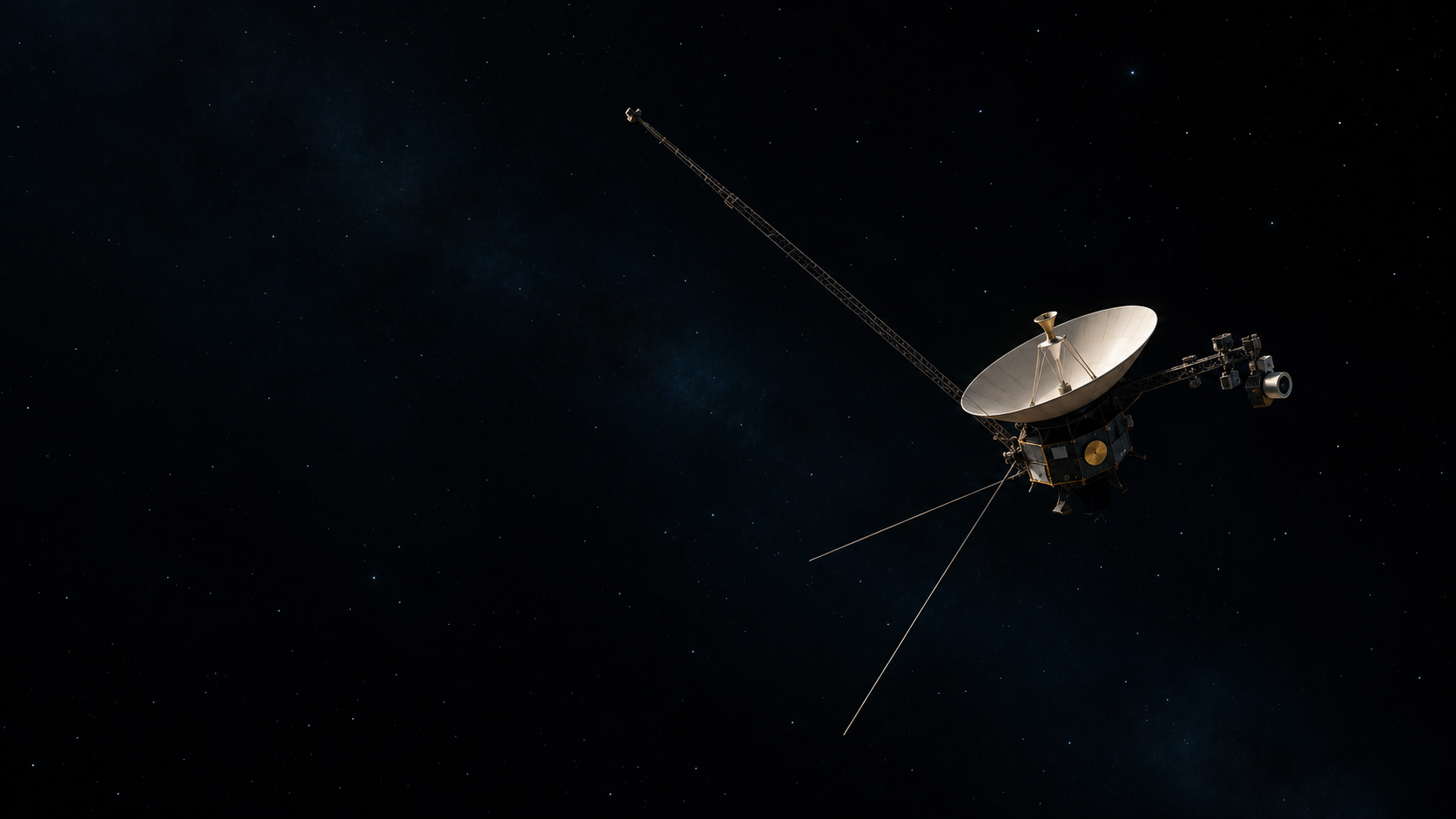
NASA Swift Telescope Faces Reported Uncontrolled Reentry
NASA Swift Telescope Faces Reported Uncontrolled Reentry
NASA’s Neil Gehrels Swift Observatory is reportedly heading toward an uncontrolled return to Earth after a rescue attempt failed. One report places the reentry during the week of November 2, 2026, but that forecast requires confirmation from NASA or an official space-tracking organization Source 3.
“Crashing to Earth” is a simplified description. During reentry, much of the spacecraft should burn, melt, or fragment. Some dense components could survive and reach the ground. Because the return is described as uncontrolled, operators may not be able to direct the remaining debris to a specific disposal area.
The available reports do not fully identify the rescue vehicle, explain why the attempt failed, confirm Swift’s current altitude, or establish the final reentry time and ground track. Those details require confirmation from NASA, the United States Space Force, or another recognized tracking authority.
What Is NASA’s Swift Observatory?
The Neil Gehrels Swift Observatory, commonly called Swift, is a NASA space telescope launched in 2004 to detect and study gamma-ray bursts. These powerful cosmic explosions can last from fractions of a second to several minutes, while their afterglows may remain visible for hours, days, or longer.
Swift was designed for rapid response. After detecting a burst, it could determine the event’s approximate location and turn toward it quickly. Its gamma-ray, X-ray, and ultraviolet or optical instruments allowed scientists to study these events across multiple wavelengths.
The observatory also examined supernovae, active galaxies, stellar explosions, and other transient objects. Its rapid observations helped researchers investigate the origins, distances, energy, and evolution of some of the universe’s most violent events.
Why Swift is an aging spacecraft
Spacecraft face increasing technical risks as they age. Typical problems can involve:
- Reduced power-system performance.
- Computer or electronic failures.
- Communication difficulties.
- Attitude-control problems.
- Deteriorating reaction wheels or gyroscopes.
- Propulsion limitations.
- Reduced ability to maintain a stable orientation.
The supplied reports describe Swift as an aging observatory approaching an uncontrolled return, but they do not provide a complete technical diagnosis. It would therefore be premature to attribute the situation to one specific component.
A spacecraft may remain partly functional while losing the ability to control its orbit. Communications, scientific instruments, attitude control, and propulsion are separate capabilities. Mission controllers might still receive signals even if the spacecraft can no longer raise its orbit or maintain the orientation needed for safe operations.
Why Is Swift Returning to Earth?
Orbital decay
Spacecraft in low Earth orbit travel through an extremely thin atmosphere. Even at high altitude, residual gas creates drag and gradually removes orbital energy.
As the spacecraft drops lower, the atmosphere becomes denser and the drag increases. This can accelerate the descent until atmospheric resistance causes a rapid fall toward reentry.
Orbital decay can continue even when controllers can communicate with a spacecraft. Communication alone does not mean the vehicle has enough fuel, power, or control authority to maintain its orbit.
Why operators may be unable to prevent reentry
Extending a spacecraft’s orbital lifetime generally requires several systems to operate together:
- A functioning propulsion system.
- Reliable attitude control.
- Adequate electrical power.
- Stable communications.
- Sufficient fuel or propellant.
- A trajectory that can still be changed safely.
If one or more of these capabilities is unavailable or unreliable, controllers may be unable to raise the orbit or prevent reentry. The available reports describe Swift’s return as uncontrolled but do not confirm whether the observatory remains in contact with operators or retains limited control functions Source 1.
What Happened During the Reported Rescue Attempt?
Several reports say that an effort was made to prevent or manage Swift’s return. One account states that the observatory is expected to reenter after the attempt failed Source 1.
The available summaries do not identify the rescuing spacecraft, the mission name, its launch date, or the technical method used. A rescue could theoretically involve stabilizing Swift, restoring control, changing its orbit, or assisting with disposal. None of these possibilities should be treated as confirmed in Swift’s case.
The reports from WhoWhatWhy and The Magzter describe a NASA telescope nearing an uncontrolled return after a failed rescue mission, but the supplied excerpts provide no technical evidence beyond that broad claim Source 7 Source 9.
Important unanswered questions include:
- The identity of the rescue vehicle or mission.
- The objective of the rescue attempt.
- The reason it failed.
- Swift’s communication status.
- The observatory’s current altitude.
- Its remaining fuel and control capability.
- The expected reentry window.
- The predicted geographic corridor.
- The amount of debris likely to survive.
The available material does not support claims about a specific mechanical failure, collision, launch accident, or mission-control decision.
When Will Swift Reenter?
One supplied report places Swift’s expected reentry during the week of November 2, 2026 Source 3. Another report says the return was expected “this week” without providing a complete date Source 1.
That timing should be treated as a forecast rather than a fixed appointment. Reentry predictions can change significantly because of atmospheric density, solar activity, orbital altitude, spacecraft orientation, remaining mass, and exposed surface area.
Tracking agencies may initially provide a broad window and narrow it as Swift descends. Ground-based radar, optical observations, orbital models, and international monitoring networks can improve the forecast, although the exact breakup point may remain uncertain until shortly before reentry.
What Happens During Reentry?
The spacecraft will compress air in front of it and experience intense aerodynamic heating. Friction contributes to the heating, but atmospheric compression is also a major factor. Panels, insulation, wiring, and other lightweight materials may vaporize or break apart.
Swift may begin fragmenting at high altitude, creating a debris trail along its flight path. Dense components such as structural sections, tanks, reaction wheels, batteries, or instrument parts could potentially survive. The actual outcome depends on the observatory’s construction, entry angle, mass distribution, and breakup altitude.
The supplied reports provide no verified debris-survival estimate. No specific prediction should be made without an engineering assessment or official reentry analysis.
“Uncontrolled” does not mean random. Swift will continue to follow a physical orbit, and tracking agencies can estimate its path. However, operators may be unable to select the final impact area because of changing atmospheric conditions, uncertainty about the spacecraft’s orientation, and the difficulty of modeling the breakup sequence.
Does Swift Pose a Danger to People?
The risk to any individual person is expected to be very low. Earth has a large surface area, much of it covered by oceans, remote land, or sparsely populated regions. Reentry also destroys much of the spacecraft before any surviving material reaches the ground.
The risk is not zero. Dense fragments could land across a long corridor, and an uncontrolled event cannot rule out populated areas in advance. Authorities therefore continue tracking the object even when the individual public risk remains small.
If suspected spacecraft debris is found, do not touch, move, or collect it. Hardware may be sharp, pressurized, chemically hazardous, or electrically active. Keep people away and contact local emergency services or the relevant authorities. Follow official instructions rather than social-media claims.
Why Uncontrolled Reentries Matter
Older spacecraft eventually lose power, propulsion, communications, or attitude control. Some remain in orbit for decades, while others descend more quickly depending on their altitude and design.
Modern missions increasingly include end-of-life plans such as controlled deorbiting, passivation of stored energy, propulsion reserves, and disposal requirements. Older spacecraft were often designed under different technical and regulatory expectations.
Swift’s reported reentry illustrates the difference between mission success and disposal success. The observatory can produce important science while still lacking a safe, controlled retirement path. Its reported rescue failure adds another dimension: a spacecraft that once responded rapidly to cosmic explosions may now require continuous tracking as its own orbit decays.
Frequently Asked Questions
When is Swift expected to reenter Earth’s atmosphere?
The supplied reports place the expected reentry around the week of November 2, 2026. This is a forecast, not a confirmed final time. Atmospheric conditions and new tracking data could change the window.
Why is Swift returning to Earth?
Reports say the telescope’s orbit is decaying and that it can no longer reliably avoid reentry. They also say a rescue attempt intended to prevent or manage the descent failed. The technical cause remains unconfirmed.
Will the entire telescope reach the ground?
No. Much of the spacecraft is expected to burn up or fragment during reentry. Some dense components could survive, but no verified debris estimate is available in the supplied reports.
Could Swift’s debris hit a populated area?
That possibility cannot be completely ruled out during an uncontrolled reentry. However, the chance of any individual being struck is generally very low. Tracking agencies narrow the possible corridor as the spacecraft descends.
Can NASA still control Swift?
The reports describe the return as uncontrolled but do not establish whether NASA retains communication with the spacecraft or limited control over some systems. Current NASA or official tracking statements are needed to answer that question.
What should people do if they find suspected spacecraft debris?
Do not touch, move, or keep it. Maintain a safe distance and contact local emergency services or the relevant authorities. Follow official guidance rather than unverified social-media reports.
Conclusion
NASA’s Swift Observatory is reportedly approaching an uncontrolled atmospheric reentry after a rescue attempt failed. One supplied report places the event around the week of November 2, 2026, but the timing remains subject to updated tracking and atmospheric models Source 3.
Most of the observatory may burn up, although some dense debris could reach the ground. The danger to any particular person is expected to be very small, but professional monitoring remains necessary because operators cannot reliably direct an uncontrolled spacecraft to a chosen disposal area.
Swift’s descent also highlights the importance of end-of-life planning. The telescope transformed transient astronomy and produced years of valuable research. Its final reentry demonstrates why spacecraft disposal remains an essential part of mission design.