Iranians Face Anxious Wait Amid Attack Threat
Iranians Face Anxious Wait Amid Attack Threat
Iranians face an anxious wait as reports describe a possible attack and uncertainty spreads over what could happen next. Available reporting confirms concern about a potential threat but does not establish its timing, location, likely targets, scale, or civilian impact.
That distinction matters. A reported threat is not the same as a confirmed military operation. The available source summaries do not verify that an attack has begun, evacuation orders have been issued, or casualties and infrastructure damage have occurred.
The immediate story is therefore defined by two developments: civilian fear and a lack of clear, independently verified information. Political tension between Washington and Tehran, regional security arrangements, and debate in the United States over military accountability provide context, but none proves that an attack is imminent.
What Is Known About the Threat?
The New York Times reports that Iranians are experiencing an anxious wait amid the threat of an impending attack Source 1.
The supplied summary does not identify who might launch an attack, what prompted the warning, or whether the threat concerns a specific operation, a broader security alert, or political rhetoric. It also does not identify a target, timetable, military plan, or expected civilian consequences.
The supported conclusion is limited: Iranian civilians are reportedly waiting amid fears of a possible attack. The available material does not confirm that an attack has occurred or that one is certain to occur.
How Uncertainty Affects Daily Life
Uncertainty can influence ordinary decisions before any confirmed military action. People may reconsider travel, commuting, shopping, banking, school attendance, or work arrangements. Families may contact relatives more frequently or consider whether to remain in cities, stay home, or travel elsewhere.
These are possible responses, not developments confirmed by the supplied reporting. Their importance lies in how a perceived threat can alter daily life even when no strike has been reported.
Residents should distinguish among official emergency notices, reporting from established news organizations, independently verifiable eyewitness accounts, anonymous social media claims, and political commentary. Readers should check publication times, geographic scope, and whether other credible sources confirm a claim.
The available material does not establish the location or scope of a possible attack. It does not show that Tehran, another Iranian city, a military facility, energy infrastructure, or civilian areas are targets. Readers should not infer casualties, evacuations, damage, communications outages, military deployments, or border closures without direct confirmation.
Practical Information Civilians Need
The most useful updates would concern:
- Official emergency instructions.
- Transport, airspace, and border notices.
- Confirmed school and workplace guidance.
- Hospital and public-service information.
- Shelter or evacuation instructions, if issued.
- Verified disruptions to communications, fuel, food, or medical care.
General preparedness advice should not replace local instructions. Authorities may issue guidance that differs by city or region. Broad warnings are less useful than confirmed notices about a closed airport, transport change, school decision, or emergency procedure.
The source summary provides no polling or nationwide measurement of Iranian public opinion. Claims about how all Iranians feel would go beyond the evidence. The narrower supported conclusion is that the reported threat has created an atmosphere of anxiety and waiting.
The Political Deadlock Between Washington and Tehran
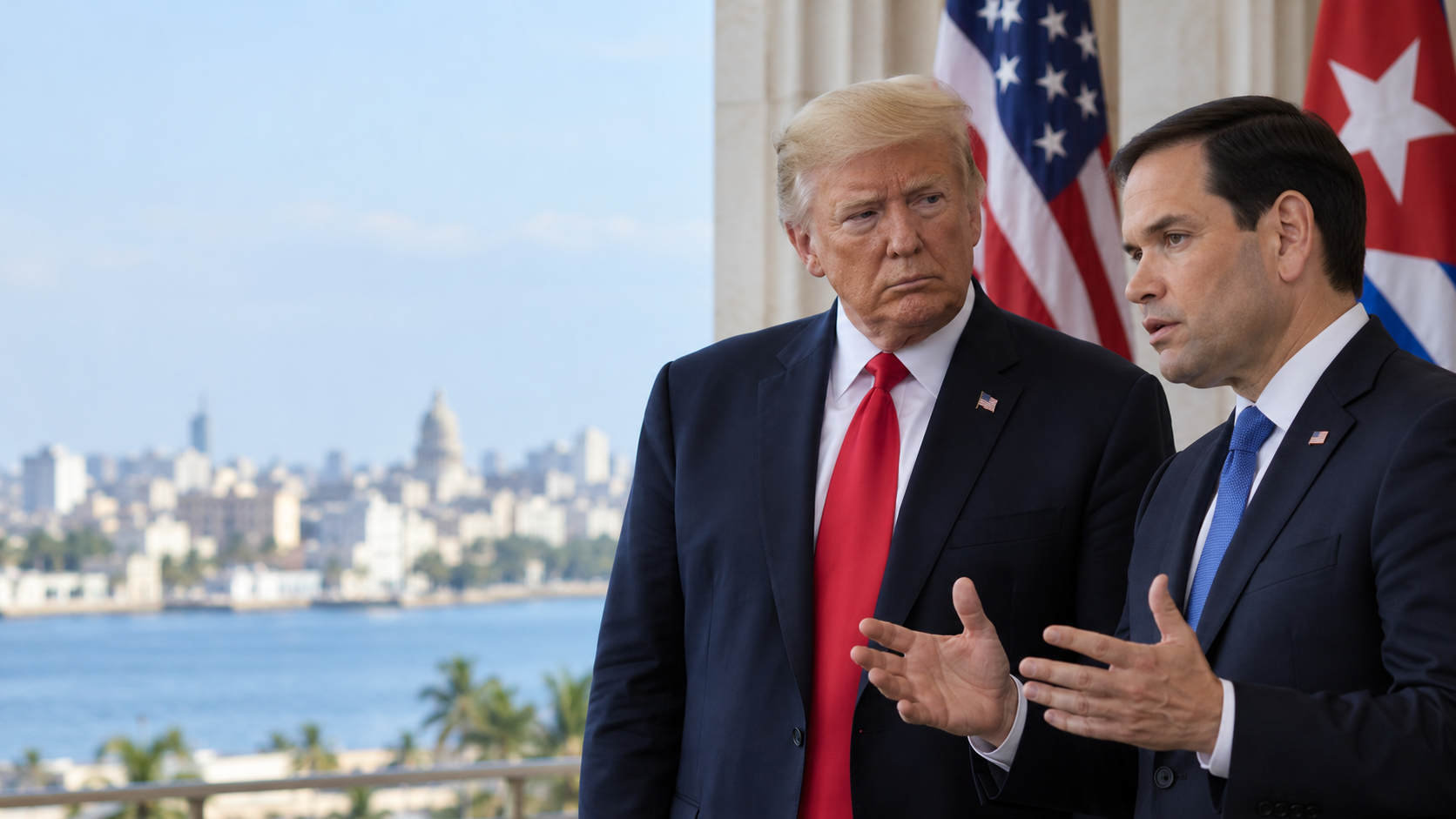
A Time report examines a deadlock between Donald Trump and Tehran against the backdrop of approaching U.S. midterm elections Source 3.
Election periods can influence how governments present foreign-policy disputes. Leaders may face pressure to demonstrate strength, defend national interests, or avoid actions voters view as reckless. Public statements, negotiating positions, sanctions, and military warnings can all carry domestic political consequences.
The report’s framing does not establish that U.S. election politics caused the reported threat or will determine military decisions. It places the confrontation within a political environment where domestic calculations may affect the room for compromise.
Political deadlock can reduce opportunities for communication, but it does not make military action inevitable. The key uncertainty remains whether the reported threat reflects an active operational plan, a contingency warning, or broader political signaling.
Regional Security Concerns
An Iran International report discusses a Mecca pact linking three Sunni powers as concerns grow over attacks backed by Iran Source 7.
The supplied summary does not identify all three parties or provide the pact’s complete terms. Claims about attacks backed by Iran should therefore remain attributed to the report rather than presented as independently verified facts.
A regional agreement could involve diplomatic coordination, intelligence sharing, security planning, or political signaling. Its practical effect cannot be assessed without the full text, the identities of the participants, and evidence of implementation.
Security alignments can strengthen deterrence and improve coordination, but they can also deepen polarization and encourage counter-alignments. The available source identifies a regional development that may shape perceptions surrounding Iran; it does not establish what outcome will follow.
A wider confrontation could raise concerns about armed groups, shipping routes, energy infrastructure, diplomatic facilities, and border security. No supplied source confirms disruption to shipping, attacks on energy sites, threats to diplomatic facilities, or related action by allied groups.
U.S. Accountability and Pete Hegseth
The Jerusalem Post reports that an impeachment threat involving Pete Hegseth has intensified scrutiny of his conduct during the Iran war Source 9.
The supplied summary does not establish that impeachment has occurred, formal proceedings have reached a final stage, or misconduct has been proven. “Impeachment threat” should therefore be understood as a description of political pressure or a reported possibility, not a completed constitutional process.
The scrutiny may involve questions about operational authority, legal requirements, congressional notification, classified information, and responsibility for military decisions. These are areas of review, not confirmed findings against Hegseth.
Domestic disputes in the United States may influence how Iranian officials assess American intentions and political stability. The supplied reporting does not show that the impeachment threat caused anxiety in Iran; it provides context for the broader political environment.
Confirmed Facts and Remaining Unknowns
The supplied sources establish four limited points:
- The New York Times reports that Iranians face an anxious wait amid a reported threat of attack Source 1.
- Time examines a deadlock between Donald Trump and Tehran in the context of approaching U.S. midterm elections Source 3.
- Iran International discusses a Mecca pact linking three Sunni powers amid concerns over attacks backed by Iran Source 7.
- The Jerusalem Post examines an impeachment threat involving Pete Hegseth and scrutiny of his conduct during the Iran war Source 9.
The summaries do not establish an attack date, location, target, casualty figures, evacuation orders, military operation details, the complete terms or membership of the Mecca pact, a final legal outcome involving Hegseth, or a direct causal link between U.S. election politics and the reported threat.
Several unrelated entries, including items about “taiwan typhoon champi,” “hasil motogp hari ini,” the Arizona 4th Congressional District, “chicago bears,” Sydney FC versus Adelaide United, and “sufmi dasco ahmad,” provide no relevant evidence about Iran and should not support claims about the crisis.
What to Watch Next
The most important developments would be specific statements from Iranian authorities, the United States, and relevant regional governments. Readers should look for concrete information about timing, geography, airspace, transport, emergency services, and civilian instructions.
Other indicators may include direct talks, mediator involvement, public de-escalation proposals, reduced military rhetoric, new sanctions, or countermeasures. Diplomatic activity does not necessarily mean that a settlement is near; it may signal an effort to prevent escalation or communicate demands.
Reliable updates should address transport, communications, schools, workplaces, medical services, fuel, food, and any official shelter or evacuation guidance. Readers should check publication times, compare multiple reports, and distinguish confirmed events from forecasts.
Conclusion
Iranians face an anxious wait while available reporting describes a threat of attack without defining its timing, target, scale, or likely impact. That uncertainty can affect travel, family contact, work, school, and access to essential services even before any confirmed military action.
The wider crisis has three connected layers: civilian fear, political deadlock between Washington and Tehran, and regional and U.S. accountability concerns. The supplied sources provide context for each layer, but they do not establish that an attack has begun, war has been formally declared, or specific consequences have occurred.
The next stage requires verified updates, careful attribution, and attention to civilian needs. Reported threats should remain separate from confirmed events, and political speculation should not replace evidence.
FAQ
Is Iran under attack?
The supplied reporting describes a threat of attack and an anxious wait but does not confirm the timing, location, or occurrence of an attack. Readers should consult current official statements and reputable news coverage.
Why are Iranians anxious?
Uncertainty about a possible attack can create fear about personal safety, family members, travel, communications, and essential services. The available summary does not provide nationwide polling or measurements of public sentiment.
What is the U.S. political dispute involving Iran?
A Time report examines a deadlock between Donald Trump and Tehran in the context of approaching U.S. midterm elections Source 3. The summary does not establish how the dispute will develop or affect military decisions.
What is the Mecca pact?
An Iran International report discusses an agreement linking three Sunni powers as concerns grow over attacks backed by Iran Source 7. The summary does not identify all parties or provide the pact’s complete terms.
What is the impeachment threat involving Pete Hegseth?
The Jerusalem Post reports that an impeachment threat has increased scrutiny of Hegseth’s conduct during the Iran war Source 9. The summary does not establish that impeachment has occurred or misconduct has been proven.
How can readers verify updates about the Iran crisis?
Use official statements alongside reporting from established news organizations. Check publication times, compare multiple accounts, distinguish confirmed events from forecasts, and avoid unattributed social media posts or incomplete headlines.