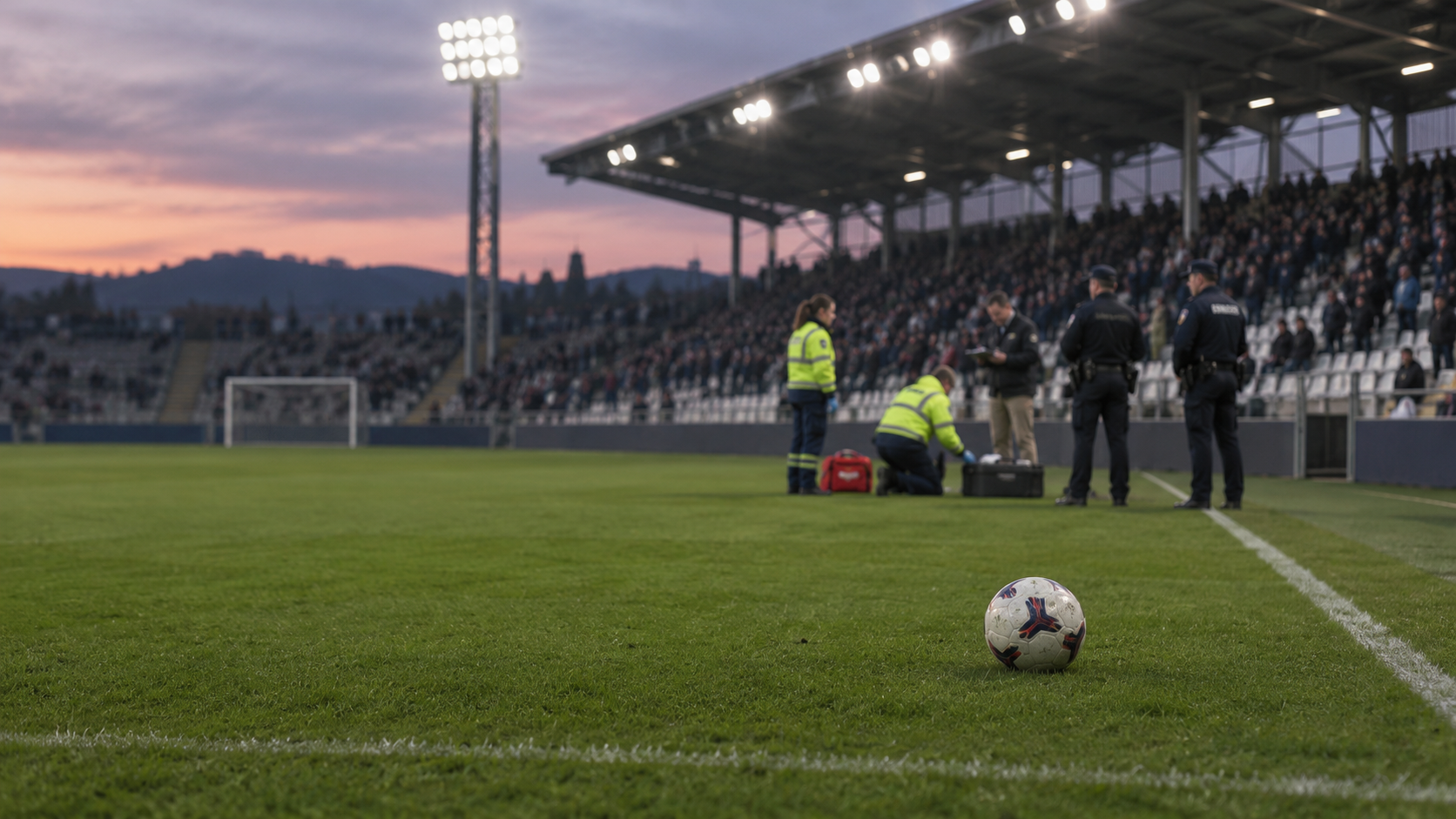
Can We Love Football Without Accepting Its Harm?
Can We Love Football Without Accepting Its Harm?
Football creates belonging. A club can connect generations, neighborhoods, cities, and strangers who might otherwise have little in common. The sport offers drama, skill, rivalry, ritual, and the emotional release of sharing a result with millions of people.
That appeal creates an uncomfortable question: can people love football without accepting the physical and mental damage imposed on the athletes who make it possible?
The question is not an argument against every player, coach, or supporter. It challenges the idea that admiration must include silence. Supporting football does not automatically mean endorsing every injury, abusive culture, or institutional failure associated with it. However, fandom can become complicity when supporters reward systems that treat player suffering as part of the entertainment product.
The ethical distinction matters. Watching a match is not the same as demanding that an injured player return early. Supporting a team is not identical to defending a league’s medical decisions. Enjoying competition does not require celebrating reckless contact.
Football’s physical and mental damage deserves attention because the sport’s excitement can hide its cost. Injuries, neurological risks, psychological pressure, and weak accountability are connected to the way the sport is organized, sold, discussed, and consumed.
Football’s Entertainment Value Depends on Physical Risk
Contact and collision are built into the spectacle
Football’s intensity depends partly on physical risk. Tackles, blocks, falls, headers, collisions, and repeated contact create moments that supporters experience as courage, commitment, and power.
Some injuries are accidental. Others arise from rules, training practices, scheduling, playing surfaces, equipment, or a culture that rewards aggression. The distinction matters because not every injury is inevitable. A sport can contain physical competition while still reducing unnecessary exposure to harm.
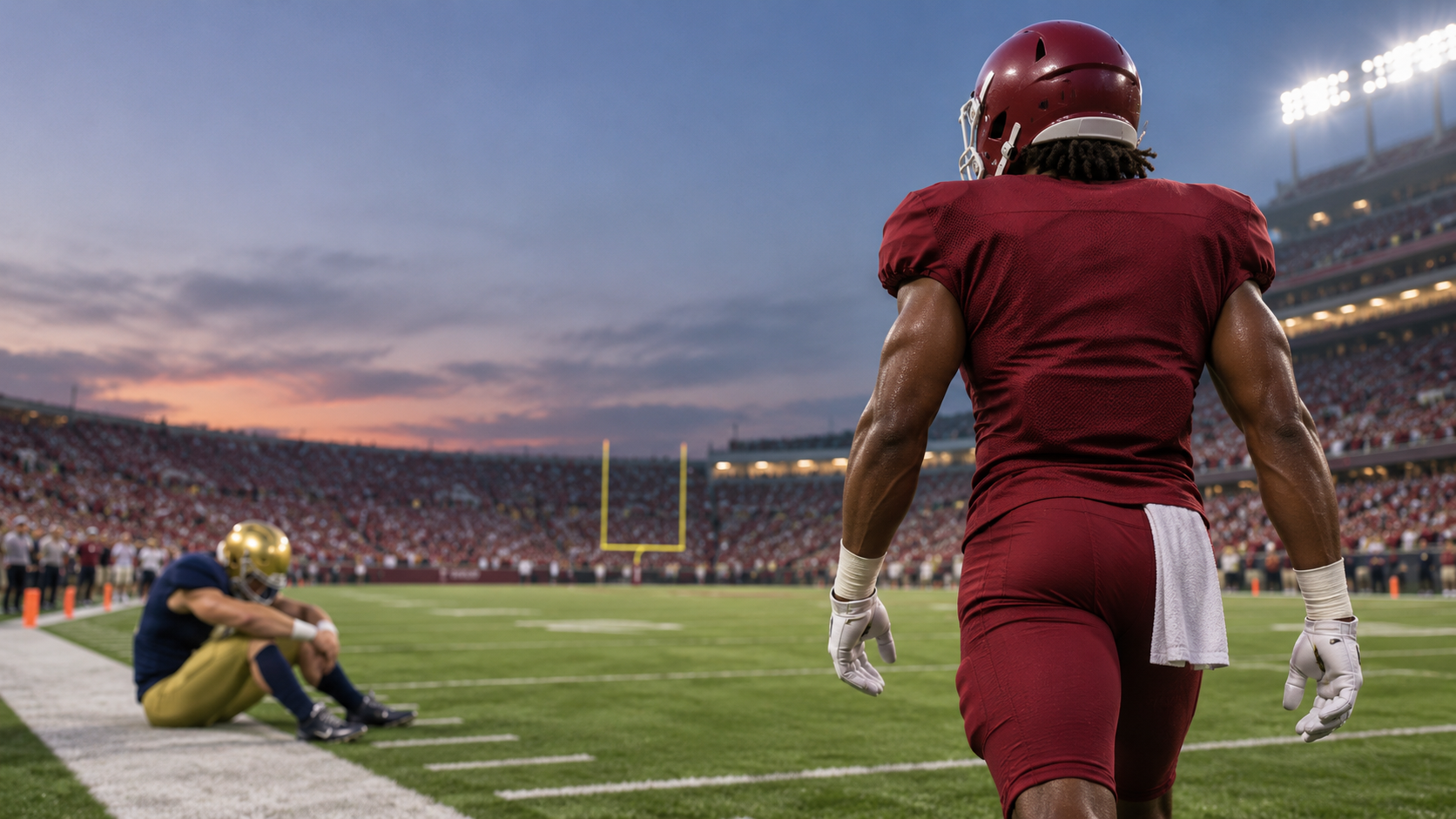
Spectators can also become accustomed to visible pain. A player who leaves the field injured may receive applause before television coverage quickly returns to the next play. The incident becomes a dramatic interruption rather than the beginning of a potentially long medical and personal crisis.
This pattern does not mean fans directly cause every football injury. It shows how entertainment can make suffering appear normal. When pain is repeatedly presented as evidence of commitment, audiences may stop asking whether the risk was necessary.
The culture of toughness can discourage honest reporting
Players may feel pressure to continue despite pain because their position, contract, reputation, or team’s season appears to depend on their availability. “Playing through it” is often praised as an expression of loyalty. Protecting one’s health can instead be interpreted as weakness or a lack of commitment.
This pressure can come from several directions. Coaches may need results. Teammates may depend on a player’s participation. Clubs may fear losing a competitive advantage. Media coverage may question an athlete’s toughness. Sponsors may value constant visibility. Fans may demand an immediate return.
The result is a dangerous reversal of priorities. A medical decision becomes a test of character. An athlete who follows medical advice may be criticized for failing to sacrifice enough for the team.
Rewarding availability over long-term health can cause players to hide symptoms, minimize injuries, or return before recovery is complete. Responsible football requires a culture in which reporting pain is treated as professional behavior, not betrayal.
Spectators often see the event, not the aftermath
A match lasts hours. Rehabilitation can last months or years.
Fans see the tackle, collision, or fall. They may not see surgery, restricted movement, chronic pain, sleep disruption, financial uncertainty, or the emotional strain of losing a career. Television coverage often moves from the injured player to the next storyline before the consequences become visible.
An athlete may return to competition while still facing physical limitations. A successful return does not prove that the injury had no lasting effect. The public may also know little about the player’s family responsibilities, treatment decisions, or fear about the future.
Football’s entertainment model benefits from focusing on the event. Ethical support requires attention to the aftermath.
Physical Damage Can Continue Long After the Final Whistle
Acute injuries are only the most visible problem
Football can involve concussions, ligament and tendon injuries, fractures, spinal trauma, joint damage, and repetitive strain. Severity varies by athlete, position, injury, treatment, and recovery conditions.
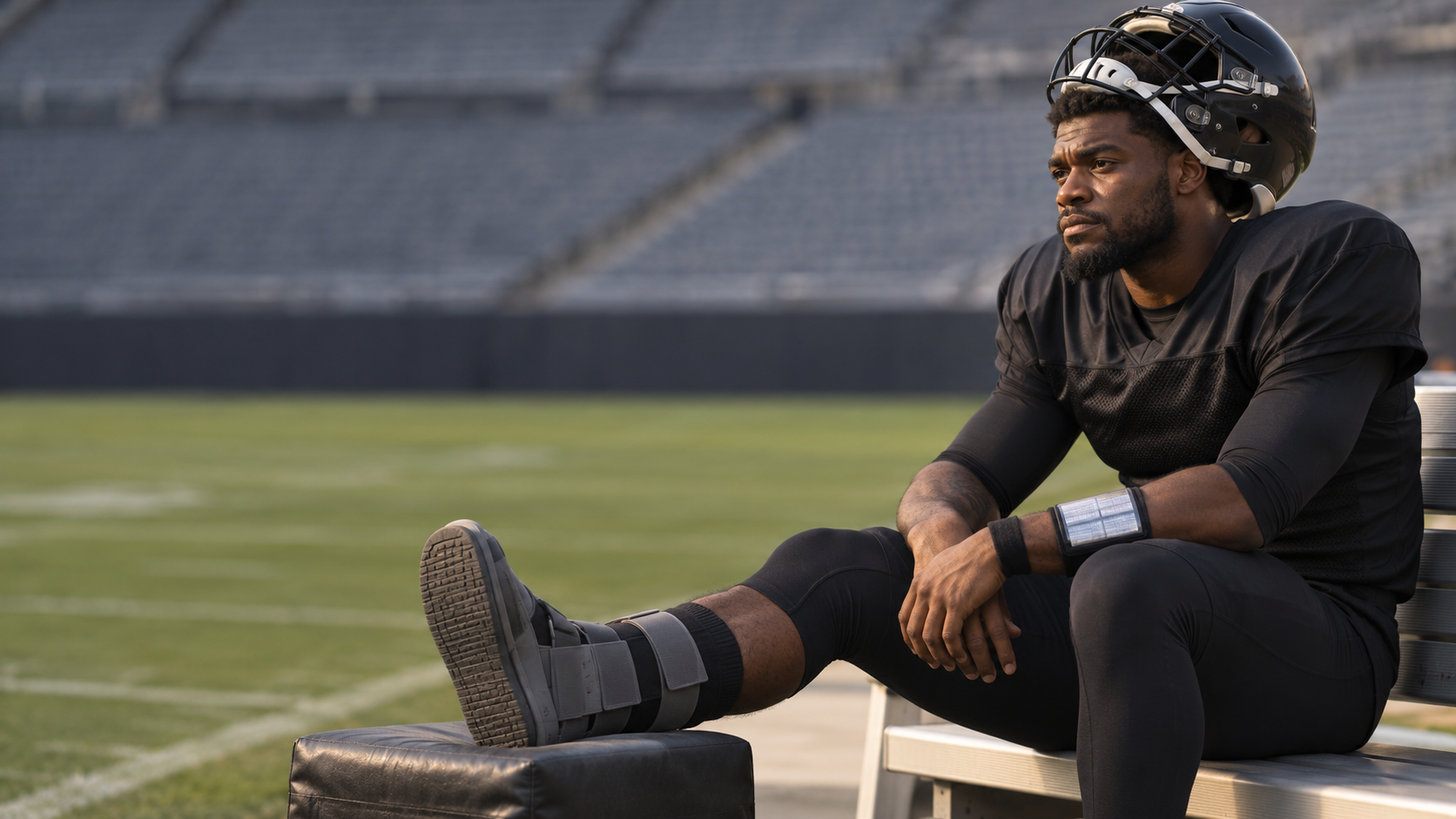
An athlete’s return to competition does not always mean a complete return to previous health. Rehabilitation may restore function while leaving pain, reduced confidence, limited mobility, or a greater risk of future problems. Repeated injuries can affect everyday life long after a playing career ends.
The public often treats an injury as resolved when a player appears in a lineup again. That assumption is too simple. Medical recovery is not always visible, and competition can resume before every consequence has disappeared.
Repeated impacts raise difficult neurological questions
Football and brain injuries have become a major ethical issue because head impacts can occur in obvious collisions as well as during routine play. A diagnosed concussion is one concern. Repeated lower-force impacts create another. Long-term neurological outcomes are complex and should not be reduced to confident claims about any individual athlete.
No responsible discussion should diagnose a player from television footage or present disputed medical questions as settled facts. The appropriate response is caution, independent medical evaluation, transparent research, and meaningful protection for athletes.
The recovery of Jack Campbell illustrates the uncertainty behind an injury update. Campbell said he had full movement in his lower body and was making progress with his upper body, according to reporting from The New York Times.Source 3 That update offers hope, but it does not establish a universal recovery path. Visible progress does not automatically mean that physical, neurological, or psychological effects have ended.
Fans often follow recovery narratives as though they were sports storylines. The person recovering may experience uncertainty, fear, dependency, and pressure that never appear in a headline.
Financial rewards do not erase the ethical problem
Professional athletes may receive high salaries, medical treatment, and opportunities unavailable in many other occupations. Compensation matters, but it does not resolve every ethical question.
Payment does not eliminate the need for informed consent. It does not guarantee that athletes understand long-term risks. It does not excuse employer pressure, compromised medical independence, poor rehabilitation, or inadequate post-career care.
A financial contract may compensate for risk. It does not make avoidable harm acceptable. Athletes should have access to independent medical advice and should not have to choose between treatment and job security.
The Mental Health Cost Is Easier to Ignore
Athletes live under constant performance pressure
Players are evaluated through results, selection decisions, contracts, statistics, public criticism, and social media reactions. Their work is unusually visible, and mistakes can be replayed, discussed, and mocked indefinitely.
Injury can intensify this pressure. A player may feel responsible for disappointing teammates, supporters, coaches, or employers. A performance-based identity can make a medical event feel like a personal failure.
Athletes also face demands for public access. Supporters may believe that buying tickets or merchandise gives them a right to explanations about a player’s body, form, absence, or private life. Accountability does not require the removal of privacy.
Mental health in football requires the same seriousness as physical health. Players need confidential support, time to recover, and protection from retaliation when they report psychological distress.
Retirement can expose psychological and emotional strain
Retirement can be a carefully chosen career decision, but it can also follow accumulated injury, exhaustion, disappointment, or loss of control. Andrew Luck’s decision to retire from the NFL illustrates how the demands of professional football and the burden of repeated setbacks can intersect. ESPN discussed his reasons in a report published on December 6, 2022.Source 5
One athlete’s experience cannot represent every retirement. It can, however, challenge the assumption that leaving professional football is simple. Retirement can mean losing routine, status, income, team relationships, physical identity, and a clear sense of purpose.
Fans may celebrate a retirement as a brave or sensible decision without considering the distress that preceded it. A player can be grateful for a career and still be harmed by its demands.
Public criticism can intensify private suffering
Players who miss games, make mistakes, leave a club, retire early, or discuss mental health can face hostility from supporters and commentators. Abuse is often defended as passion, but passion does not require harassment.
Sporting criticism concerns performance. Abuse attacks a person’s dignity, family, identity, or right to make medical decisions. The distinction should remain clear.
Athletes do not stop being people when they fail to meet supporters’ expectations. A club’s poor result does not justify threats. A missed game does not prove laziness. A decision to protect one’s health does not show disloyalty.
What Does It Mean for Fans to “Sign Off” on the Damage?
Buying the product supports the football economy
Fans contribute to football through tickets, broadcasting subscriptions, merchandise, sponsorship engagement, advertising attention, and online activity. This participation does not mean an individual supporter caused a specific injury. It does mean that consumers help sustain the institutions that decide how the sport operates.
That raises a reasonable ethical question: should supporters demand safer conditions from profitable leagues, clubs, and governing bodies?
Fans cannot control every medical decision. They can influence the culture surrounding those decisions. Their attention helps determine which stories receive praise, criticism, and financial value.
Fans can normalize harmful behavior
Supporters normalize harm when they celebrate reckless hits without considering consequences, mock injured players, demand premature returns, or treat pain as proof of loyalty.
Language matters. Calling an injured player weak can encourage concealment. Praising dangerous contact as “old-school football” can make safety reforms appear cowardly. Blaming an athlete for following medical advice can pressure others to ignore their symptoms.
Ethical fandom does not require rejecting physical competition. It requires rejecting the glorification of preventable suffering.
Emotional attachment makes criticism difficult
Football supporters defend teams because clubs represent identity, family history, local pride, and community. Nostalgia can make past danger seem more acceptable. Fear that safety reforms will change the sport can also create resistance.
Some fans separate the game from the institutions running it. That separation can be useful, but it can also become a reason to ignore evidence of harm. Loving football may make people rationalize its worst features because criticism feels like betrayal.
The harder form of loyalty is accountability. Supporters can value the sport while questioning the choices made by leagues, clubs, broadcasters, and owners.
Responsibility Does Not Rest With Fans Alone
Leagues and governing bodies control the rules
Leagues and governing bodies should enforce safety standards, improve medical protocols, fund independent research, protect whistleblowers, publish meaningful injury data, and penalize dangerous conduct consistently.
Voluntary safety messaging is insufficient when financial incentives reward more games, more exposure, and uninterrupted schedules. Institutions should not place the burden of risk management entirely on individual players.
Rules can preserve competition while reducing unnecessary contact. Medical decisions should remain independent of competitive pressure.
Clubs and teams shape everyday working conditions
Teams and clubs control much of an athlete’s daily environment. Their responsibilities include honest injury reporting, independent medical decisions, adequate rehabilitation, mental health access, and long-term support.
A player should not have to choose between medical advice and job security. Athletes who report pain or psychological distress should be protected from retaliation, ridicule, and career punishment.
Post-career support also matters. The employment relationship should not end the moment an athlete becomes less useful to the team.
Media organizations influence what audiences value
Media coverage can humanize athletes or turn them into commodities. Reporting should explain recovery timelines, medical uncertainty, player consent, long-term consequences, and effects on families.
Dramatic injury narratives attract attention, but coverage should not make suffering another form of entertainment. The broader ethical tension between loving football and accepting its harm has been examined by The New York Times.Source 1
Responsible journalism should give audiences enough context to understand that a player’s body is not simply part of the product.
Why Some Source Material Should Not Be Used as Evidence
Several supplied entries contain only names, numbers, or search-style labels. Sources 2, 4, 6, 8, 9, and 10 provide no substantive reporting, context, publication dates, or accessible URLs. They cannot support claims about football injuries, mental health, or athlete safety.
Numbers such as “200+,” “20,000+,” and “1,000+” have no meaning without definitions, methodology, dates, and sources. They should not be treated as evidence.
Source 7 concerns the Detroit Lions’ 2026–27 schedule and does not establish anything about football-related physical or mental harm.Source 7 It is therefore excluded from the main argument.
Can Football Become Safer Without Losing What Fans Love?
Safety reforms do not have to eliminate competition
Football faces a false choice between becoming completely risk-free and remaining unchanged. No physical sport can remove every risk, but it can reduce avoidable harm.
Possible reforms include stronger concussion protocols, limits on dangerous contact, independent medical authority, tougher return-to-play standards, accessible mental health services, and guaranteed post-career support.
These measures do not eliminate skill, strategy, rivalry, atmosphere, or drama. They change what the sport is willing to sacrifice for entertainment.
Fans can change what the sport rewards
Supporters can reject harassment of injured players, avoid glorifying reckless play, demand transparent injury reporting, support responsible journalism, and challenge the idea that playing through serious pain proves loyalty.
Fans can also criticize institutions without abandoning football. They can remain emotionally invested while refusing to treat athletes as disposable.
A more honest form of loyalty
Responsible loyalty includes accountability. Defending football at all costs may protect its image while leaving players exposed.
Genuine love for football should include concern for the people whose bodies and minds make the game possible. A sport is not weakened when supporters ask it to protect its participants. It is strengthened.
Conclusion: Loving Football Should Not Require Accepting Preventable Harm
Football creates joy, identity, community, and connection. The same system can also produce serious physical and mental damage. These truths can exist together.
Fans are not solely responsible for injuries, neurological risks, psychological pressure, or institutional failures. Leagues, clubs, governing bodies, medical systems, media organizations, and employers hold significant power. Yet supporters’ money, attention, and language help determine what the sport continues to prioritize.
Jack Campbell’s recovery update shows the uncertainty and human cost behind a short injury report. Andrew Luck’s retirement shows how the demands of professional football can shape a player’s decision to leave. Neither story should become a simple inspirational narrative that hides complexity.
The practical ethical position is clear: keep the passion, reject the glorification of suffering, and demand better protection, transparency, medical independence, and long-term care.
Football should be judged not only by the excitement it creates, but also by how it treats the people who create it.
FAQ
Is it unethical to watch or support football?
Watching football is not automatically unethical. The ethical concern arises when supporters ignore preventable harm, glorify dangerous conduct, abuse injured players, or demand that athletes sacrifice their health for entertainment.
Fans can support football while demanding stronger protections and accountability.
What physical damage can football cause?
Football can involve concussions, fractures, ligament and tendon injuries, spinal trauma, joint damage, repetitive strain, chronic pain, and reduced mobility. Severity and long-term outcomes vary by athlete, injury, treatment, and recovery conditions.
How does football affect players’ mental health?
Players may face pressure from performance expectations, injuries, contracts, public criticism, social media abuse, and uncertain retirement prospects. Injury can disrupt identity, income, routine, relationships, and a sense of purpose.
Mental health effects differ between individuals and should not be assumed from a public event alone.
Does high pay make football injuries acceptable?
No. High compensation does not remove questions about informed consent, employer responsibility, medical independence, workplace pressure, or long-term care.
Payment may compensate for risk, but it does not make avoidable harm ethically acceptable.
What can football fans do to support player safety?
Fans can reject harassment of injured or struggling players, avoid glorifying reckless hits, stop demanding premature returns, support accurate injury reporting, and ask teams and leagues for transparent medical standards and independent care.
Player health should matter more than a single result.
Can football remain exciting while becoming safer?
Yes. Competition, skill, strategy, rivalry, and atmosphere do not depend entirely on preventable injuries.
Safety improvements can reduce unnecessary harm while preserving the qualities that attract people to football.